George Elwood (born June 4th, 1894) is an Elysian military officer and government official serving as Director of the State Intelligence Service and Member of the Politburo under Supreme Protector Archer Maine. He previously served as Director of the SIS’ predecessor, the Military Intelligence Service, from October 1922 to June 1929 when it was incorporated into the SIS. He is notable for being among the highest ranking Elysian officers to defect to the Revolutionary Guard during the Elysian Civil War.
As director of the State Intelligence Service, Elwood handles all foreign intelligence and counterterrorism operations of the Unity State. During a brief period of time following an attempt on his life by the clandestine paramilitary organization MAJESTY, he avoided most public appearances, however has mostly sprung back into a more public role following multiple reconstructive surgeries.
Early Life
George Elwood was born on the 4th of June 1894 to Carl and Mila Elwood (née Rosewood) in Starfell, United States of Elysia as the eldest son. His parents were entrepreneurs of some renown in the area, owning a number of textile workshops in the city. Elwood was soon to be joined by two sisters as well, however due to his position as the family’s only boy, he often gained a great deal more attention than his little sisters.
Elwood grew to be incredibly fond of the outdoors and nature in general. He often spent hours on end in the forest and back garden of his childhood home, often playing hide and seek with his younger sisters. He was a longtime member of the junior section of Starfell’s local football team, Starfell Football Club, or SFC Starfell.
Elwood was a relatively successful student all throughout his time in school. He especially excelled in history, languages and physical education. His success continued long into High School, graduating with high enough grades that he could practically go into any field he wanted. For most of the summer of that year, he however struggled to come up with what he wanted to study, and what career he wanted to follow in the future. He eventually ended up enlisting into the Fort Union Ranger Academy to gain experience in the military, and think on what he wanted to do in the future. This decision created a great rift between Elwood and his parents, culminating in his parents disowning him the day he moved from home to Fort Union.
Service in the USE
As a Junior Officer
Elwood enlisted into the Fort Union Ranger Academy in August of 1912. Following basic training, he quickly enrolled himself into the officer training program. He was considered a model student by all of his instructors, however remained an enigma to most of his peers due to his tendency to keep mostly to himself.
He was promoted to Ensign in the summer of 1913, eventually graduating from the academy later that same year. He was assigned to the recon company of the 2nd Ranger Regiment, overseeing day to day operations of the company’s NCOs and lower enlisted personnel. He maintained the post with “an apparent lack of enthusiasm”, often showing very little concrete care in regards to his job. He was however often credited for being an enthusiastic field commander, happy to take charge of field exercises whenever the opportunity presented itself.
He was eventually transferred into the guerilla recon platoon of his company in mid 1914 amidst the stirrings of war in Evria and elsewhere. He became in charge of 3 other men, reservists brought into refresher exercises, besides himself:
Sergeant Marcus Halligan, the group's medic; Sergeant Eric Graver, demolitions and arms specialist, and the one in charge of maintaining the group’s weaponry; and Corporal Fredrick Miller, the group’s signal specialist and émigré from the former Alemannian colony of West-Elysien. His unit was promptly designated Recon Group 288, which also followed a promotion for Elwood to the rank of 2nd Lieutenant.
The Great War and Recon Group 288
At the outbreak of the Great War, he was properly assigned to the 4th Recon Company of the 2nd Ranger Regiment, and sent to the rugged, forested terrain of Hollosend’s forested northeastern sections. His group began to gain notoriety through their exploits, specializing in infrastructural sabotage across the northeastern front. He was in charge of an entire strike force during the first Battle of Annesburg, working alongside 5 other reconnaissance groups to scout out enemy positions and sabotage ways for the Hollosendian to retreat from the city. This action earned him a great deal of distinction, as well as a promotion to the rank of 1st Lieutenant.
As the Great War in Elysia began settling into trench warfare, the group’s once much more mobile service was replaced with acting as sappers and stormtroopers for more regular infantry formations. For the majority of 1915, Recon Group 288 was attached to the 303rd infantry battalion, operating mostly around the town of Manito. However, the Group’s static role began coming to an end in early 1916, as Hollosendian forces began an offensive to reconquer Annesburg from Elysian occupation.
As friendly units were pushed from the city, Elwood’s unit was tasked with a special sabotage operation on the rail-line going to the city. Ultimately, the group ventured in unprepared and uninformed, succeeding in their mission, but being caught off guard by Hollosendian infantry and forced to flee. In the ensuing chaos, all members of the group were scattered, leaving Elwood to think each would be taking their own route back to the extraction point, only to discover all but him had perished during the operation. Elwood was decorated and promoted to the rank of Captain following the operation, however the memory of those he’d left behind would haunt him for years.
A few days later after the operation’s end, hostilities would cease between the United States and Hollosend via the signing of the Remington-Wesley Treaty.
Recruitment into Military Intelligence
After the war, Elwood was assigned to a mostly bureaucratic role in the U.S.E Army Headquarters in Nexus, the city he would come to call home for much of his adult life. He was primarily focused in overseeing the necessary logistics for training of new officers and NCOs for the Ranger Corps. He would only hold this post for a few months after the end of the war, before being approached by General Myron Lowry with an offer to transfer him to the service of the Military Intelligence Service. Elwood, already considering his brief stint in that office dreary, quickly said yes.
During his time in the MIS, he would oversee internal security operations attempting to uncover and weed out any possible Entente or Central Power spies within the USE, a role he would serve in with distinction, uncovering multiple foreign information networks within the country, which would skyrocket him to the rank of Major. Upon the end of the war in Evria, and the lack of a need for the kind of work he’d been doing so far, Elwood moved onto combatting violent socialist and communist groups in Elysia, uncovering their informant networks, and disrupting any possible arms shipments to them. As many of these groups settled away from more violent means of protest, and into more legitimate politicking, Elwood would once again be commended for his work ethic, and promoted to Colonel in mid 1919 at the age of 25. However, as the administration grew ever radical, his tasks changed into overseeing the mass arrests of what the administration referred to as “foreign sponsored agitators”, as well as their imprisonment in hastily constructed camps in the northeastern parts of Elysia.
As legitimate communists turned into moderate socialists, and eventually simply people who disagreed with the current administration, Elwood began growing horrified by the increasingly large arrests, summary executions and tyrannical acts ordered by his superiors. He did his best to keep his head low, knowing he’d face the same exact fate as thousands of others were he to express his disagreement with the orders handed down to him from the President.
His tasks remained the same all the way up until 1921, when the Elysian Civil War began in earnest. Despite clearly possessing the skills to fight the war directly, Elwood remained in his position of overseeing the labour camps, up until the last one was liberated by the Revolutionary Army. He was quickly transferred into the role of a counter-insurgency specialist for the White Army’s attempts at quelling the nascent rebellion. It was after this assignment that he made the decision of undermining the White Army subversively. He began misdirecting assignments to false addresses, underevaluating force sizes on purpose, and secretly gathering vital pieces of intelligence on his own that he smuggled to the Revolutionary Guard via a chain of contacts.
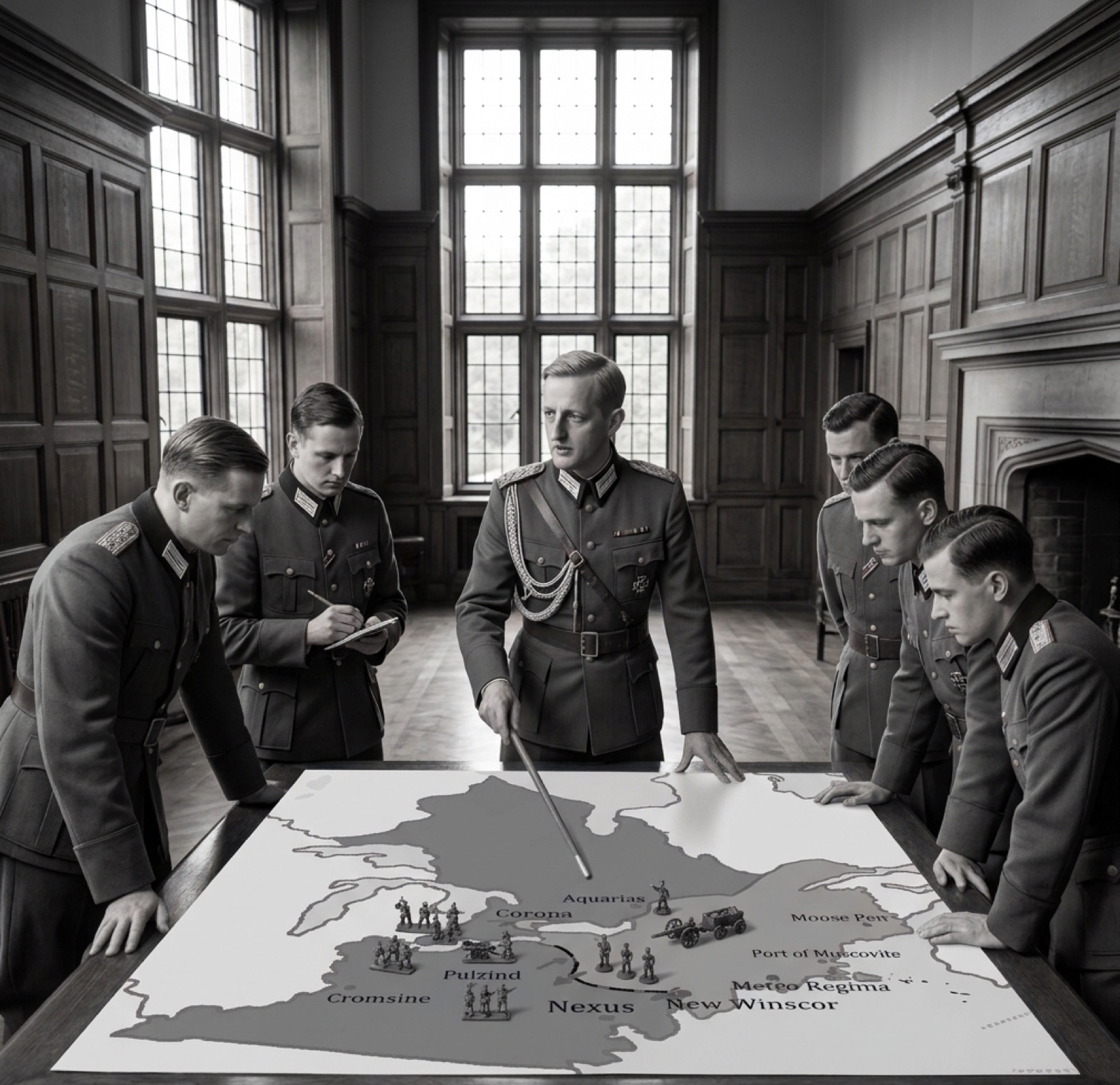
In late November of 1921, Elwood would come into possession of the precise troop formations, unit strengths, supply lines, and chains of command for major troop concentrations on the Tango-Line. The battle, having raged on for months without a clear end in sight, finally had a way of ending in a favourable way to Elwood. Directly disobeying orders, Elwood would make a dangerous escape from Nexus, avoiding military police and MIS agents in search of him for weeks on end, before finally making contact with a defected Ranger detachment behind White Army lines, to whom he would surrender himself, and the plans.
In the Guard
In mid December of 1921, following weeks of background checks and debriefings by the Revolutionary Guard, Elwood would officially join the Guard, acting as a vital backbone of legitimate military training for the Guard, who’d lacked a coherent General Staff up until that point. He would serve with distinction throughout the rest of the civil war, acting as the head of the Guard’s fledgling intelligence division, until the final White Army stronghold would fall in February of 1922.
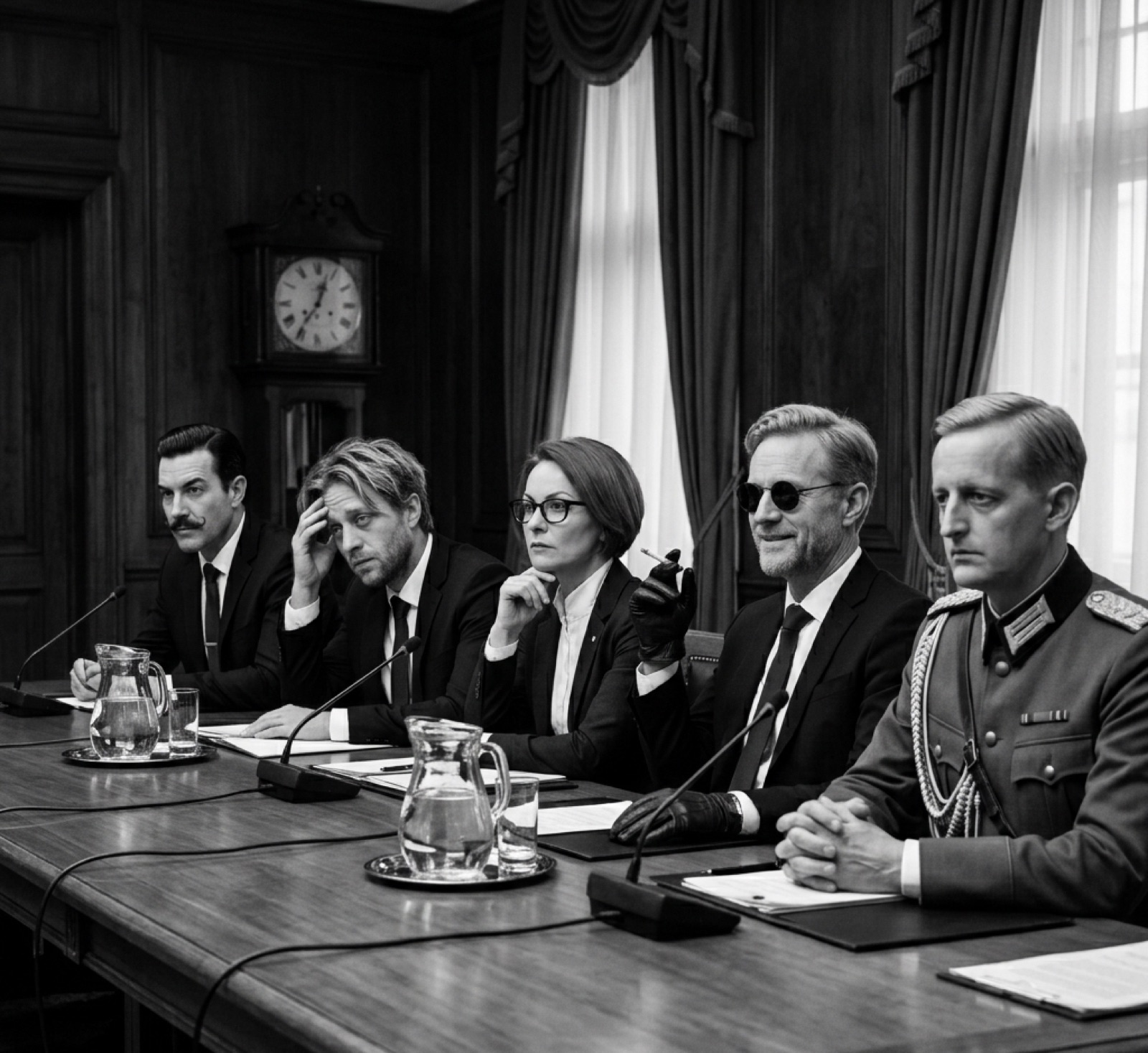
Like many other remaining or defected White Army personnel, Elwood was subject to scrutiny during the Reconstruction Authority’s, and later Unity State’s Aquilla war crime trials. However, his case was largely dismissed by the judges due to his actions having essentially won the war for the Guard, as well as the Unity State being in a sore need for experienced officers.
Service in the Unity State
Anti-Partisan action
Between 1922 and 1925, Elwood’s skillset was put to good use by the newly appointed Supreme Protector, Archer Maine. As soon as the charges of treason were dismissed by the war crime tribunal, Elwood was named as the head of the Unity State’s Military Intelligence Service, his main focus being to fight any remaining White Army loyal partisan and insurgent activity, as well as overseeing counter-espionage operations during the Reconstruction Period’s political isolation from the world.
His actions proved fruitful, with the MIS eventually tracking down and eliminating most of the major partisan cells within the E.S.U, even managing to uncover a clear link to Hollosendian material support for the Partisans. The situation nearly escalated into something larger, however would remain as nothing but a brief anomaly, the matter eventually concluding with Elysia’s re-admittance into the Elysian Doctrine.
Investigation into MAJESTY
Elwood, having been personally involved with the E.S.U’s 1927 expedition into Hyperborea, and subsequently having been present at the rediscovery of the Nichirian temple complex at site “Malkuth”, found himself at the core of former ONI branch turned PMC MAJESTY’s plan of blackmailing Nichirin. Ultimately, he became a prime target for the organization, having been attacked by MAJESTY agents in his own home in September of 1928. With the evidence obtained from the detained agents, Elwood began spearheading the investigation on behalf of the Unity State, frequently collaborating with his Nichirian contacts from the Hyperborea expedition.
On November 23rd, 1928, Elwood was visiting Shinkeisei’s Elysian embassy to relay information regarding the investigation to Chief Historian Kanade Tachibana. After the end of the meeting, while Elwood was about to board his personal motorcade back to the airport, a concealed car bomb detonated, leaving two MIS agents dead, and injuring him gravely. He was admitted to Shinkeisei Central Hospital immediately for treatment, where he would spend time until January 20th of the next year. During his stay, his mental state would see a severe decline, as noted by the Ford-Hauer psychological evaluation test administered to him just before his release from hospital.
Elwood would return back to Elysia to spearhead Elysia’s brief expedition into the Order of Shivon, personally overseeing the interrogation, and later arrest of Shivonite dictator Thomas Binkowicz. He would also succeed in establishing a branch of Elysian Intelligence within fellow Internationale member Sidanya’s borders.
Following years of dead end leads and relative inactivity of MAJESTY, Elwood and an Elysian diplomatic delegation were informed of the location of the organization’s headquarters. Elwood would gather with him a Ranger strike force, and alongside Nichirian Kagemusha operatives Shuten and Sae Kujo. The attack would prove to be a success, with Elwood’s capture of the facility and personnel earning him a promotion to Major General, as well as the Protectorate Legion of Merit.
Personal Life
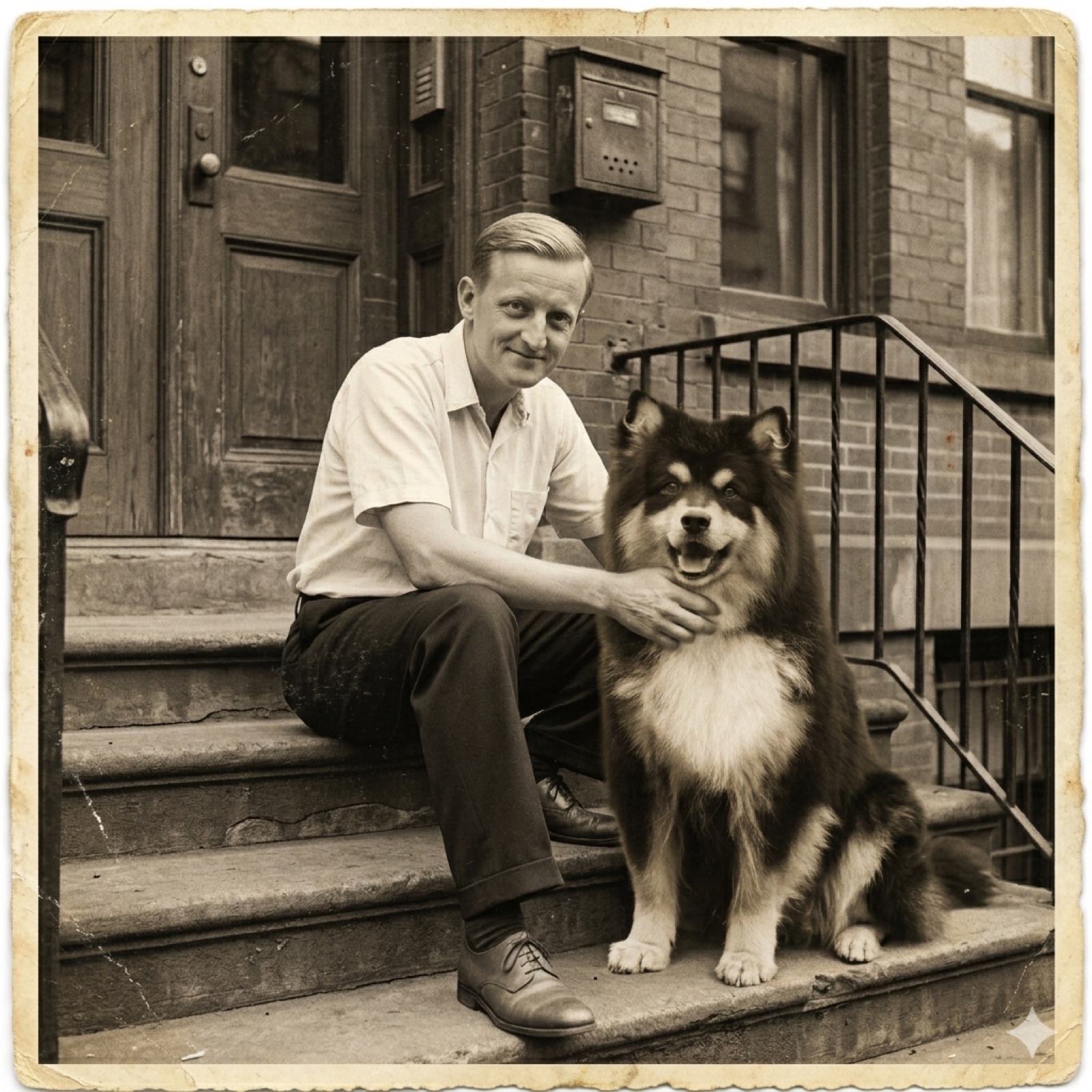
Elwood lives in Nexus’ Capital district in an apartment building housing many other government officials and workers alongside his Karjanian Lapphund Olli. He’s a lifelong outdoorsman, spending many weekends hiking and making day trips to forested areas. Elwood also maintains an active hunter’s license, occasionally partaking in game hunts.
When the occasion presents itself, Elwood has assisted in training new Rangers at Fort Union, however this practice has mostly wound down after transferring to a much more administrative role in recent years. He maintains cordial relations with most of the Politburo, however maintains a much closer friendship with writer and former Ranger Lieutenant, Daniel McCaffrey.