
The Grand Army of Unity serves as the Elysian State of Unity's military force. It is organized into three primary branches: The Army, the Navy, and the Air Force.
History
The history of Elysia’s armed forces traces their roots to the military units organized by the various polities of the Territoria Elysiaca, also known as the Elysian Legions. While originally organized into units of more than 5000 men and 300 cavalry, the fall of the Rumaic Empire brought the paper and actual strength of Elysian Legions down into units of barely 1000 men and 100 cavalry. During the later years of the Triumvirate Period, some legions were reduced to units of barely 500 men, often spread out to police infrastructure and cities against bandits.
The history of the modern Elysian military dates back to the Continental Army formed on the 15th of August 1784, almost immediately following the August Degree declaring the Commonwealth of Elysia’s independence from the Elvesterian Empire. The Continental Navy and Continental Rangers were created in close succession later in October of 1784 to defend the nascent nation in the Elysian Revolutionary War.
All three branches were demobilized after the end of the war and quickly reformed into their modern-day equivalents during the 4th Continental Congress, coinciding with the official founding of the United States of Elysia.
Following the Revolutionary Guard’s victory in the Civil War and the establishment of the Reconstruction authority of Elysia, the military had been in a state of limbo for years afterward. On paper, the Revolutionary Guard acted as the Authority’s, and later the Unity State’s, military; no official consensus had been reached on a definitive answer. Often in the Unity State’s early years, both the Revolutionary Guard and the paramilitary Civil Guard served similar tasks, with their purposes overlapping, causing undue confusion during anti-partisan operations.
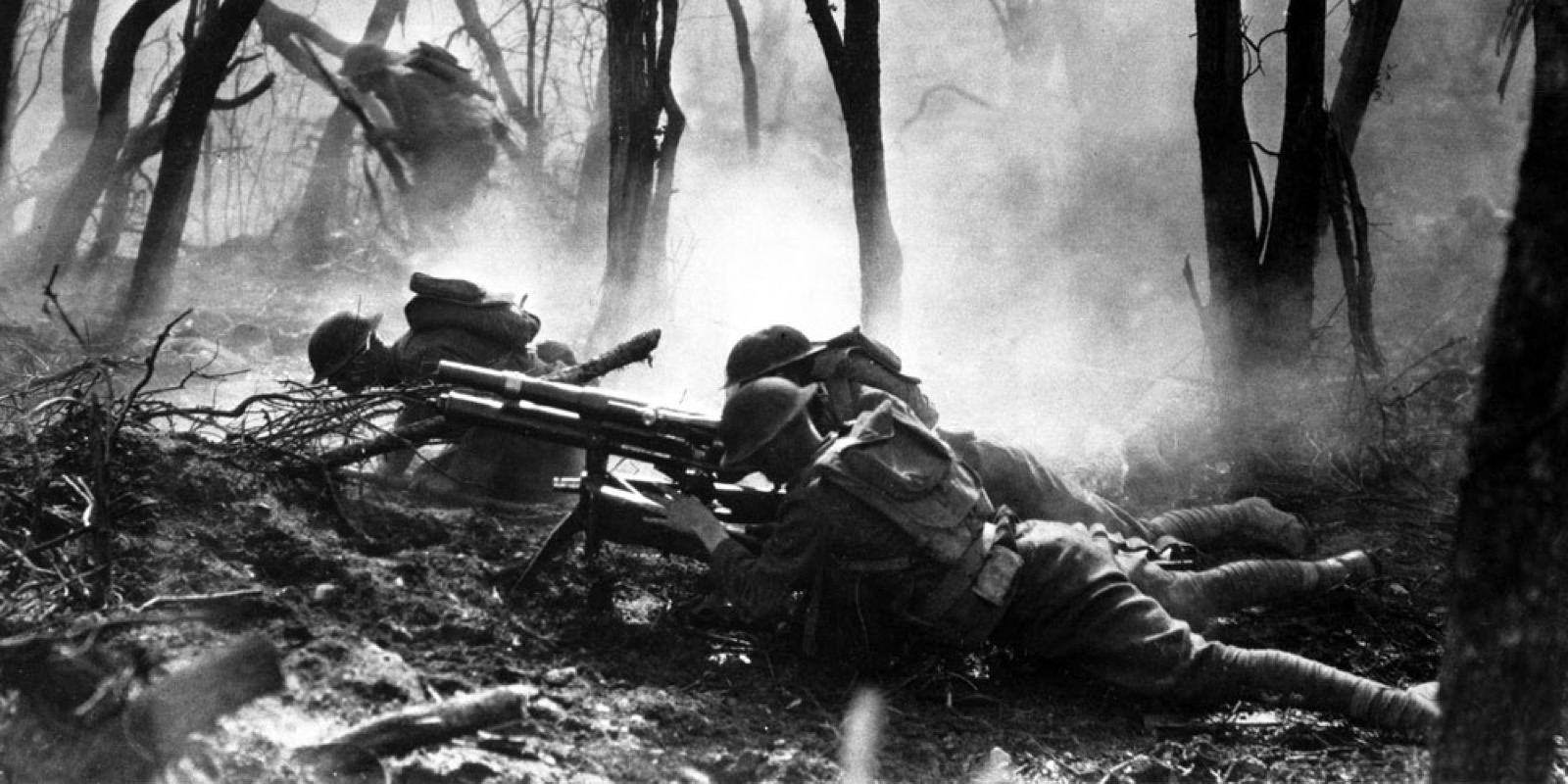
The newly appointed Minister of Defense, Arianne Malloran, campaigned long for military reform during the Unity State’s early years; however was often sidelined by more important projects in the opinion of the rest of the Politburo. It was only after the end of the Reconstruction period and Elysia’s reopening of official diplomatic relations with the rest of the world that rearmament and reorganization efforts began to be seriously discussed. With the perceived possible threats from Hollosend’s initial posturing towards the newly founded Unity State acting as the state’s largest focus for its initial few years on the world stage, Supreme Protector Archer Maine, alongside approval from the Politburo, announced the official creation of the Grand Army of Unity on the 5th anniversary of the founding of the Unity State.
Operationally, the Grand Army’s first proper engagement was Elysia’s expeditionary force sent to assist the United Socialist States of Sidanya in their civil war against nationalist rebels.
Structure
The Grand Army comprises 3 principal service branches: the Unity State’s Army, Navy, and Air Force. Following reforms during the Grand Army’s formation, the Ranger Corps, which previously operated as a separate branch within the U.S. Armed Forces, has been transferred under the authority and command of the Army. The US. Coast Guard, which operates under the Ministry of the Interior's jurisdiction in peacetime, can be attached to the Navy's authority in wartime.
Archer Maine, the Supreme Protector, serves as Commander-In-Chief of the Grand Army, holding supreme constitutional authority over all military matters. The Civilian Military Authority runs from the Supreme Protector to the government-level Minister of Defense, Arianne Malloran. The Supreme Protector and Minister of Defense are advised by the three Branch Commanders who collectively form the Joint Chiefs of Staff: General of the Army Arianne Malloran, Admiral of the Navy Anton Torres, and General of the Air Force Jack Bartlett. The Branch Commanders serve as chiefs of staff for their respective branches and hold the highest military rank in the Grand Army. Only one officer per branch may hold the designation of Branch Commander at any given time. Each service branch operates under its respective Commander's administrative control.
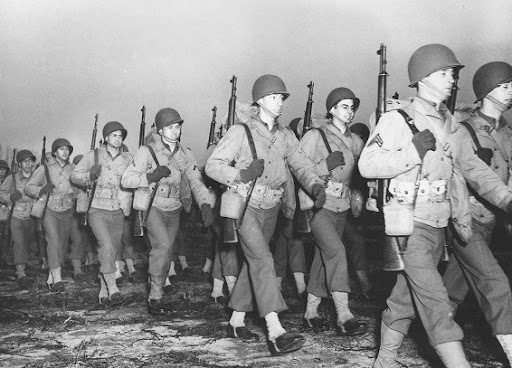
The Grand Army operates through 5 unified combatant commands, each comprising forces from multiple military departments. Each service organizes, trains, and equips forces that are then presented to the unified combatant commands through service component commands. Each unified combatant command is responsible for the strategy, planning, operations, and policy within its designated area of operations. The Grand Army maintains 5 unified combatant commands:
The U.S. Sahara Command (SAHARACOM), headquartered in Northgate and commanded by General of the Army Arianne Malloran, is responsible for the majority of the Unity State’s Saharan seaboard. SAHARACOM manages joint operations with Saint Testudera within the Western Sahara Sea and protects the industrial and political heartland of the ESU.
The U.S. Southern Command (SOUTHCOM), headquartered in Fort Freedom and commanded by General Jebediah Stark, is responsible for the southern regions of the country, primarily focused on managing the long land border with Hollosend.
The U.S. Northern Command (NORCOM) is headquartered in Charlotte and commanded by General William Peoples. It is responsible for the defense and management of the nation’s northern parts, including coordinating with Saint Testudera in the defense of the Sargassum Straits and management of the land border with the Thule Governorate.
The U.S. Expeditionary Command (EXPOCOM), headquartered in the Port of Muscovite and commanded by Admiral of the Navy Anton Torres, is responsible for all Elysian expeditionary missions outside of its own borders. Most recently, it has been in charge of overseeing the expeditionary forces sent to assist Sidanya in its civil war.
The U.S. Special Operations Command (SOCOM), headquartered in Nexus and commanded by General George Elwood, is responsible for developing and employing special forces for the Unity State. Territorially, SOCOM also oversees all bases in extreme polar environments. Uniquely, SOCOM is attached to the State Intelligence Service's command.
Ranks
| Pay Grade | Army | Navy | Air Force |
|---|---|---|---|
| O-10 |  General of the Army |  Admiral of the Navy |  General of the Air Force |
| O-9 | General | Admiral | Commander |
| O-8 | Lieutenant General | Vice-Admiral | Lieutenant Commander |
| O-7 | Major General | Commodore | Major Commander |
| O-6 | Colonel | Lieutenant Commodore | Colonel |
| O-5 | Major | Major Commodore | Major |
| O-4 | Captain | Captain | Captain |
| O-3 | 1st Lieutenant | 1st Lieutenant | 1st Lieutenant |
| O-2 | 2nd Lieutenant | 2nd Lieutenant | 2nd Lieutenant |
| O-1 | Ensign | Sub-Lieutenant | Ensign |
| E-7 | Master Sergeant | Master Chief Petty Officer | Master Sergeant |
| E-6 | Staff Sergeant | Chief Petty Officer | Staff Sergeant |
| E-5 | Sergeant | Petty Officer First Class | Sergeant |
| E-4 | Corporal | Petty Officer Second Class | Leading Airman |
| E-3 | Lance Corporal | Petty Officer Third Class | Senior Airman |
| E-2 | Private Second Class | Seaman | Airman |
| E-1 | Recruit | Recruit | Recruit |
Statistics
Ground Forces
| Category | Type | Count | ||
|---|---|---|---|---|
| Outdated | Modern | Advanced | ||
| Infantry | Fit-for-Service | 29,461,680 | ||
| Active Personnel | 2,300,000 | |||
| Reserve Personnel | 1,182,710 | |||
| Paramilitary | 0 | |||
| Armor | Cavalry | 1,500 | ||
| Armored Cars | 400 | 1,184 | 210 | |
| Tankettes | 200 | 50 | 0 | |
| Light Tanks | 200 | 1,200 | 600 | |
| Medium Tanks | 10 | 390 | 100 | |
| Heavy Tanks | 33 | 20 | 0 | |
| Artillery | Field Guns | 2,012 | 4,200 | 800 |
| Heavy/Siege Artillery | 812 | 200 | 50 | |
| Anti-Aircraft Guns | 300 | 1,587 | 100 | |
| Anti-Tank Guns | 614 | 800 | 100 | |
| Mortars | 2,310 | 7,700 | 800 | |
| Support | Vehicles | 120,321 | ||
| Engineers | 130,210 | |||
| Signal Corps | 95,400 | |||
Naval Forces
| Category | Type | Count | ||
|---|---|---|---|---|
| Outdated | Modern | Advanced | ||
| Capital Ships | Battleships | 2 | 4 | 4 |
| Light Cruisers | 3 | 6 | 2 | |
| Heavy Cruisers | 4 | 3 | 7 | |
| Battlecruisers | 6 | 8 | 6 | |
| Carriers | Fleet Carriers | 0 | 1 | 1 |
| Light/Escort Carriers | 1 | 1 | 0 | |
| Smaller Vessels | Destroyers | 3 | 67 | 37 |
| Torpedo Boats | 12 | 38 | 15 | |
| Submarines | 0 | 40 | 22 | |
| Gunboats | 62 | 23 | 10 | |
| Support | Transports | 45 | ||
| Logistics Vessels | 140 | |||
Air Forces
| Category | Type | Count | ||
|---|---|---|---|---|
| Outdated | Modern | Advanced | ||
| Fighters | Biplane Fighters | 300 | 0 | 0 |
| Monoplane Fighters | 0 | 1,050 | 650 | |
| Bombers | Tactical Bombers | 0 | 531 | 500 |
| Strategic Bombers | 0 | 241 | 550 | |
| Attack Aircraft | 0 | 600 | 924 | |
| Support | Recon Aircraft | 307 | 300 | 60 |
| Transports | 507 | |||