
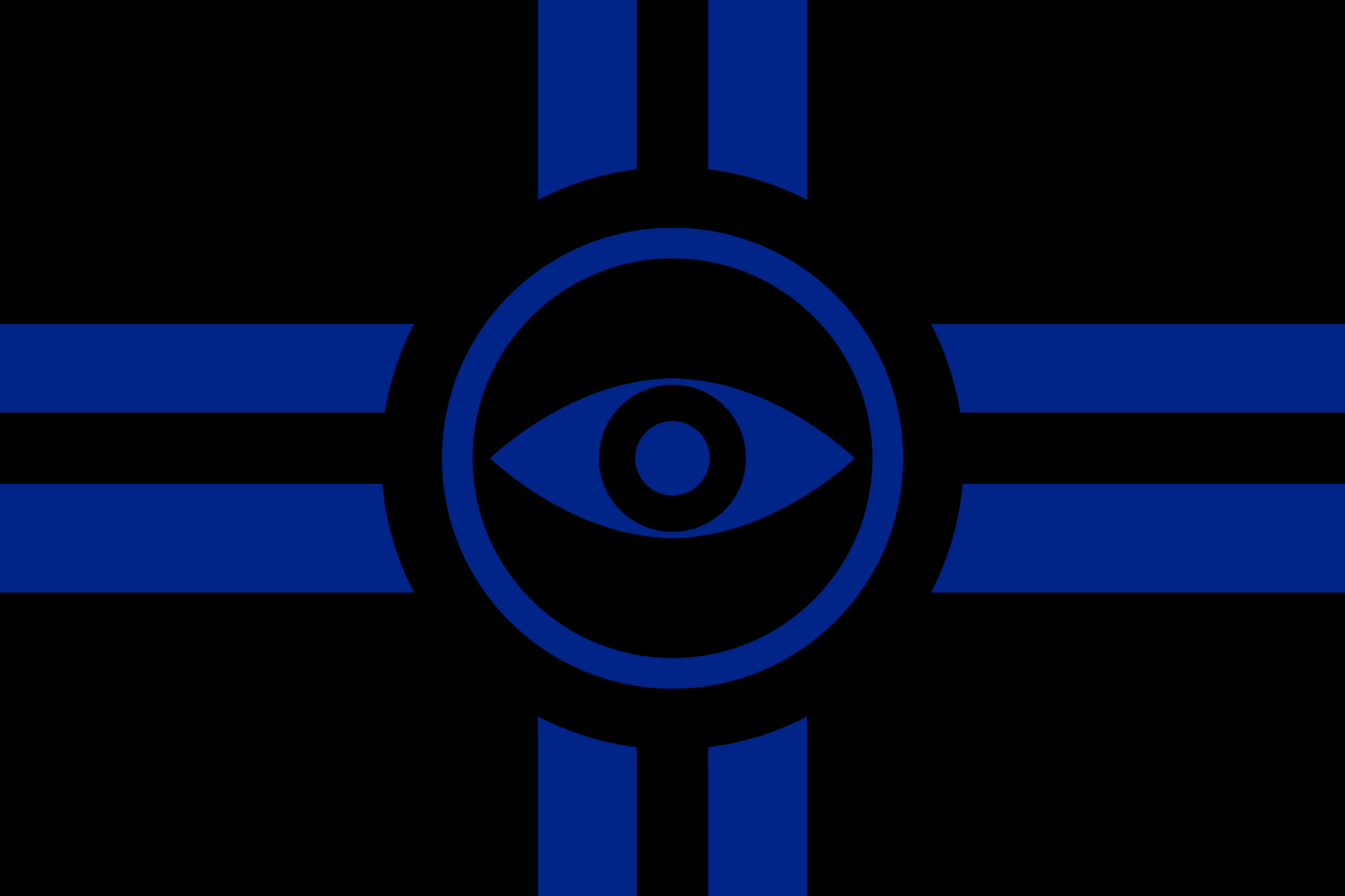
Axiom, previously called Metro Regima, is the most populous city in Elysia. It is located at the northern end of Cygnus Bay on Regima Harbor. The city comprises 6 boroughs, each coextensive with its respective counties. It is the demographic and geographic center of the Northeast Megalopolis, and the Axiom Metropolitan area, the largest metropolitan area in Elysia by both population and urban area. Despite the Gestaltist reforms of the Unity State, Axiom continues to be a global centre of commerce, culture, technology, entertainment and media, scientific output, the arts, and fashion.
With an estimated urban population in July of 1926 of 19,427,000, spread out across around 1000 km2, Axiom is the most densely populated major city in the Unity State. Axiom has nearly double the population of Aschengel, the second most populated city on the continent. The city and its metropolitan area serve as a gateway for legal immigration to the Unity State. An estimated 800 languages are spoken in Axiom, making it the most linguistically diverse city in the world. The Axiom metropolitan region is home to the largest foreign born population of any metropolitan region in the world, approximately 5.9 million as of 1926.
Axiom traces its origins to the original Rumaic colonization of Elysia, starting at around 50 BCE. The location was named Cygnus Bay due to the large population of mute swans in the area. Thanks to its proximity to the capital of Tonitria, Cygnus Bay began developing fast as a popular trading post for the area. By the early 300’s CE, Cygnus Bay was chartered as a city and renamed Metro Regima, a name it held until the end of the Elysian Civil War. The city remained an important economical and political hub throughout the Triumvirate period, however many of its districts were abandoned by the time of Evrian colonization in the 1500s. Axiom was quickly claimed and integrated with the Elvesterian Empire, and later the Elysian Commonwealth. Following independence from Elvester, Axiom was considered as a potential capital alongside Donnerbrucht, however ultimately lost out to Nexus in 1789. The modern city was formed by the 1898 consolidation of its 6 boroughs: The Upper and Lower Metropol, Ferros, Kingsland, Domis and Bowmoore.
Formerly a global center of finance, anchored by Beat Street and its stock exchange, Axiom is still one of the most economically powerful cities in the world, with the gross metropolitan product exceeding that of over US$ 2.1 trillion. The Axiom metropolitan area’s economy is bigger than all but [excluding the Unity State itself] 18 countries. Its industrial district, Ferros, remains one of the largest and most important industrial centers in the world, with many enterprises maintaining facilities there on land loaned from the Unity State. Cultural exports are also a prominent part of Axiom globally, with many prominent actors, singers and performers living in the city. The city is also home to the Regima Trekkers, the most well performing Elysian football team globally.
Etymology
The decision to rename Metro Regima came from the Supreme Protector of the Unity State, Archer Maine. As part of his short-lived campaign for cultural reform in 1923. He saw Regima’s nomenclature as a remnant of Rumaic imperialist culture. Despite moderate pushback from the locals, the city was renamed anyway. Despite this, many citizens still refer to Axiom as Metro Regima.
History
Early History
The first settlements in the area of Cygnus bay date to somewhere around 3200 BCE, with Quinar fishermen settling in the area and establishing small hunter-gatherer communities. The area eventually came into contact with Thalassan sailors exploring the area, trading various goods with the locals, namely pottery and refined metals. This slow growth along the years built the small communities into a small regional power, however most of these communities fell soon after Rumaic colonization.
Rumaic Rule
Cygnus Bay was colonized by Rumaic settlers soon after their first landings in what is now Donnerbrucht. The settlement itself was called Cygnus Sinus (lit. “Swan Bay”) up until the population grew to what the Rumaics considered to be a city. By official imperial decree, it was renamed to Metro Regima in 312 CE, marking its official recognition as a city.
Following the fall of the Empire, Axiom maintained a status of major importance as an industrial, economic and administrative center in the territory of Elysia. However, the decline of the territories and the devastation of the Triumvirate wars gradually wore down the population, leaving many districts abandoned. One of the last straws came in 932, when a Varennian army marched on the city, sacking it thoroughly. An Elysian army eventually intervened and drove the Varennians back to their land, but the damage had already been done. Many of its still remaining districts were now in ruins, and the population devastated. Prior to the flood of Elysian refugees into the region, its population hovered just above 40 thousand.
Elvesterian Rule
Following the de-facto collapse of Rumaic rule in Elysia in the aftermath of the Evrian refugee crisis, Metro Regima saw the first actual population growth in centuries, with the refugees occupying the abandoned districts and rebuilding the ruined ones. The city’s population soon surpassed 100 thousand, 500 thousand in 1654, and eventually 1 million in 1701. The city’s importance as a trade port and economic hub grew as the Elvesterian Empire designated the port of Ferros to host the headquarters of their Western Saharan naval forces. The city continued to grow as a hub for trade with the Ymirian colonies in the Southwestern Sahara. The University of Metro Regima was founded in 1754.
Elysian Revolution
During the Elysian Revolutionary War, Axiom acted as a major support base for the independence cause, with many Patriot organizations emerging in the city and skirmishing with Elvesterian troops all throughout the war. The Elvesterians wasted no time in establishing control of the city, securing Ferros, and by extension their Western Sahara naval headquarters. The city remained a stronghold of Crown loyalist forces all throughout the war, repelling the Elysians at the battle of Kingsland and forcing Mountbatten’s Army of the North to retreat south across the Mute River while pursued by Elvesterian forces.
The city remained in the hands of Elvesterian and loyalist forces until the end of the war, when Elvesterian forces were forced to evacuate the city and return it to the hands of the Commonwealth. In fear of harassment by Patriot organizations and the Continental forces, some 5 thousand refugees left along with the Elvesterians, resettling into territories across the Empire.
Post Revolutionary period and 19th century
In May 1787, Axiom was designated as the temporary capital of the Republic until an official decision on an official capital was voted on by the Continental Congress. It acted as the capital for long enough to be the city in which Vergilius Mountbatten was sworn in as president, however was soon replaced by Nexus as the official capital in 1789.
The city maintained a steady growth throughout the 19th century, with immigration from Evria bringing millions to the city, and onward to other enterprises across the continent. The modern city was formally founded following the addition of the districts of Bowmoore and Kingsland into the city (which up until that point had been separate counties) in 1898.
The city eventually became a hub of innovation for the industrial age, with the Industrial district of Ferros producing around 46% of Elysian export products by 1878. The city’s population eventually surpassed 10 million in 1899, and 15 million in 1907. Beat Street emerged as the city’s center for domestic and global commerce around 1854, with the Beat Street stock exchange being founded in 1877, it acted as the center of finance for the entire continent up until its dissolution in 1922 by the Gestaltist Party.
Early 20th Century
With the steady steady economic growth of the city, many multinational businesses began a “Race for the Skies” in Axiom, competing to build the tallest skyscrapers out of all the rest. The race was eventually won by the Dynamo Automotive corporation’s Dynamo Building, becoming the tallest manmade structure on Avium. These displays of power were exemplary of the influence and monetary wealth these corporations and monopolies had on Elysia at the time. Tensions slowly began to form between the financial interests of Beat Street and the government in Nexus, with the gradual growth in “pocket senators” in Congress, politicians firmly under the financial influence of the monopolies of Beat Street. These political powerplays, combined with the abhorrent working conditions many companies were host to, created the perfect environment for socialist movements to take root across the city.
The city played an important role during the Elysian Civil war, acting as the economic and military center of the Revolutionary Guard for most of the war. The city was the only one of its size to remain untouched by the civil war, being spared a devastating siege by both the government forces and Guard. The city was officially renamed to Axiom by decree of the Supreme Protector in 1923. Returning veterans of the Civil war facilitated a post-war economic boom, with large swathes of housing and industry being developed to facilitate further economic growth, and provide employment to those displaced by the war. The Axiom Institute of technology was founded in 1927.
Administration
The city of Axiom is governed by a strong mayor-council government. The city government is responsible for public education, correctional institutions, public safety, recreational facilities, sanitation, water supply, and welfare services. The City Council is a unicameral body of 51 council members whose districts are defined by geographic population boundaries. Each term for the mayor and council members lasts four years and has a two-consecutive-term limit (reset after a four-year break).
Economy
Today, Axiom acts as a major industrial hub for the Unity State, with industrial output making up nearly 60% of the city’s GDP. With the Industrial district of Ferros as its center, it has often been described as the “metal beating heart of Elysia”.
Besides industry, agriculture has also seen a slow rise in prominence with the construction of many greenhouses and growbeds within urban areas. These agricultural outcroppings have sometimes been described as the “Hanging Gardens of Elysia”, with the tropical greenhouse complex in Kingsland acting as a major tourist destination.
Global tourism and entertainment are also major venues of revenue for the city, with millions of international and domestic tourists visiting the city annually. Many districts and monuments act as major landmarks for tourism, with the current record being made in 1926, with 66.6 million tourists visiting the city that year alone. Major landmarks in Axiom include the Metropolitan Museum of Art, the Dynamo Building and the Kingsland greenhouse complex. Bell Square acts as the brightly illuminated hub of the Velvet Avenue theater and leisure district, and home to some of the last Private companies in the entertainment industry of the Unity State.
Geography
Axiom lies in northeastern Elysia, approximately halfway between Donnerbrucht and Nexus. Its location at the mouth of the Mute River, which feeds into a naturally sheltered harbor and then into the Sahara Sea, has helped the city become a significant trading port. The city's land has been altered substantially by human intervention, with considerable land reclamation along the waterfronts since Rumaic colonial times; reclamation is most prominent in the Lower Metropol.
Under the Köppen climate classification, Axiom has a humid subtropical climate (Cfa). Winters are chilly and damp, and prevailing wind patterns that blow sea breezes offshore temper the moderating effects of the Sahara Sea. The Sahara and the partial shielding from colder air by the Apalachen Mountains keep the city warmer in the winter than inland Elysian cities at similar or lesser latitudes.
Demographics
Axiom is the most populous city in Elysia, with 19,427,000 urban residents as of the 1926 census. Due to the city’s long history with foreign immigration, Axiom boasts a wide variety of different ethnicities and languages, with over 800 different languages estimated to be spoken in the city. Many ethnicities occupying sections of the city have set up small ethnic enclaves that maintain the culture and traditions from their countries of origin.
The most odd of all of these enclaves is Little Trinacria in Kingsland, maintaining a sizable population of people that maintain Rumaic cultural practices and traditions. In fact, approximately 2 million citizens claim Rumaic ancestry from the time prior to Evrian colonization of Elysia.
Religion-wise, the city is predominantly Nazarist, a variety of other religions are practiced in Axiom, including Native folk religions. More recently however, with the Unity State’s secular policies, atheism has seen a strong rise in popularity as well.
Culture
Axiom is a frequent setting of many novels and movies and has often been described as a global cultural capital. The city is home to many cultural movements, including the Art Deco movement, salsa, and certain forms of jazz. Additionally, Axiom is renowned for its theater scene, with Velvet Avenue being lined with 41 theaters, each with 500 seats. Many stage and screen stars have gotten their start in the industry working in Axiom’s theaters.
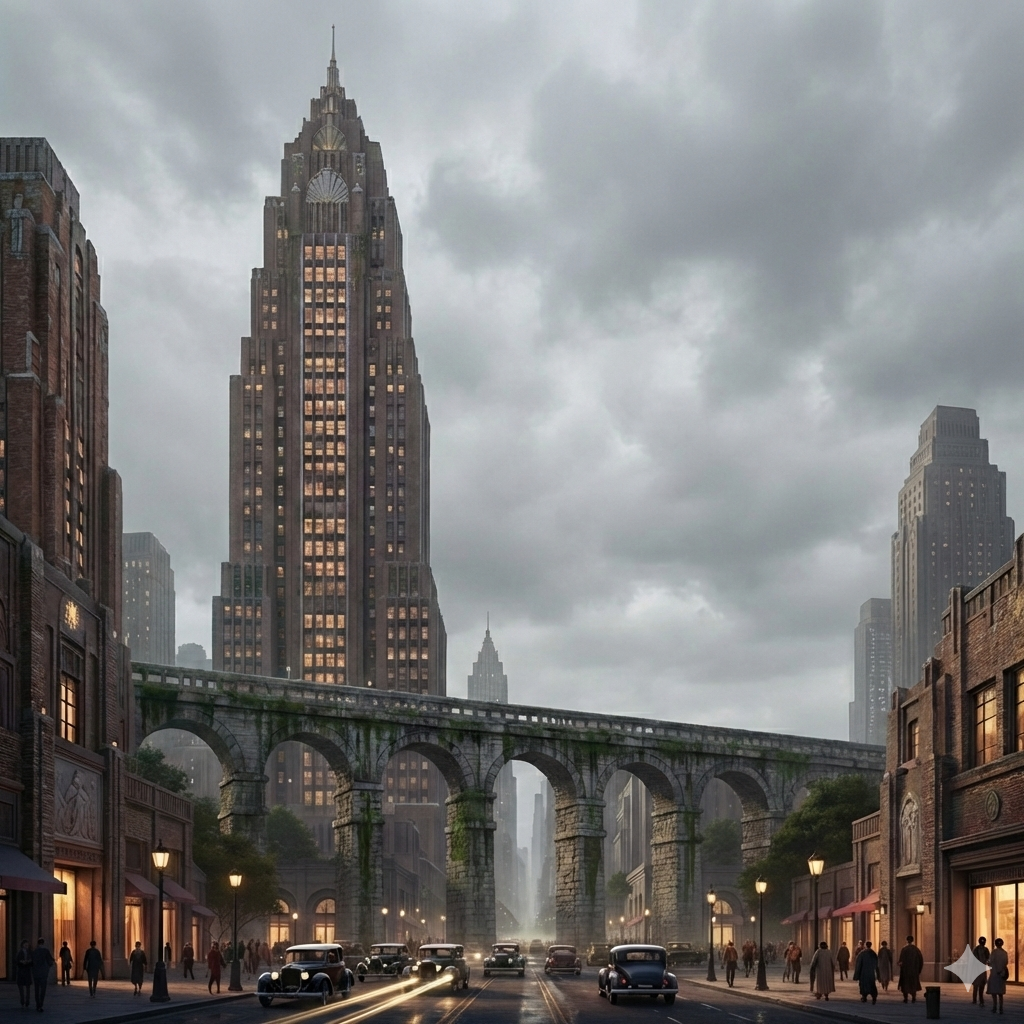
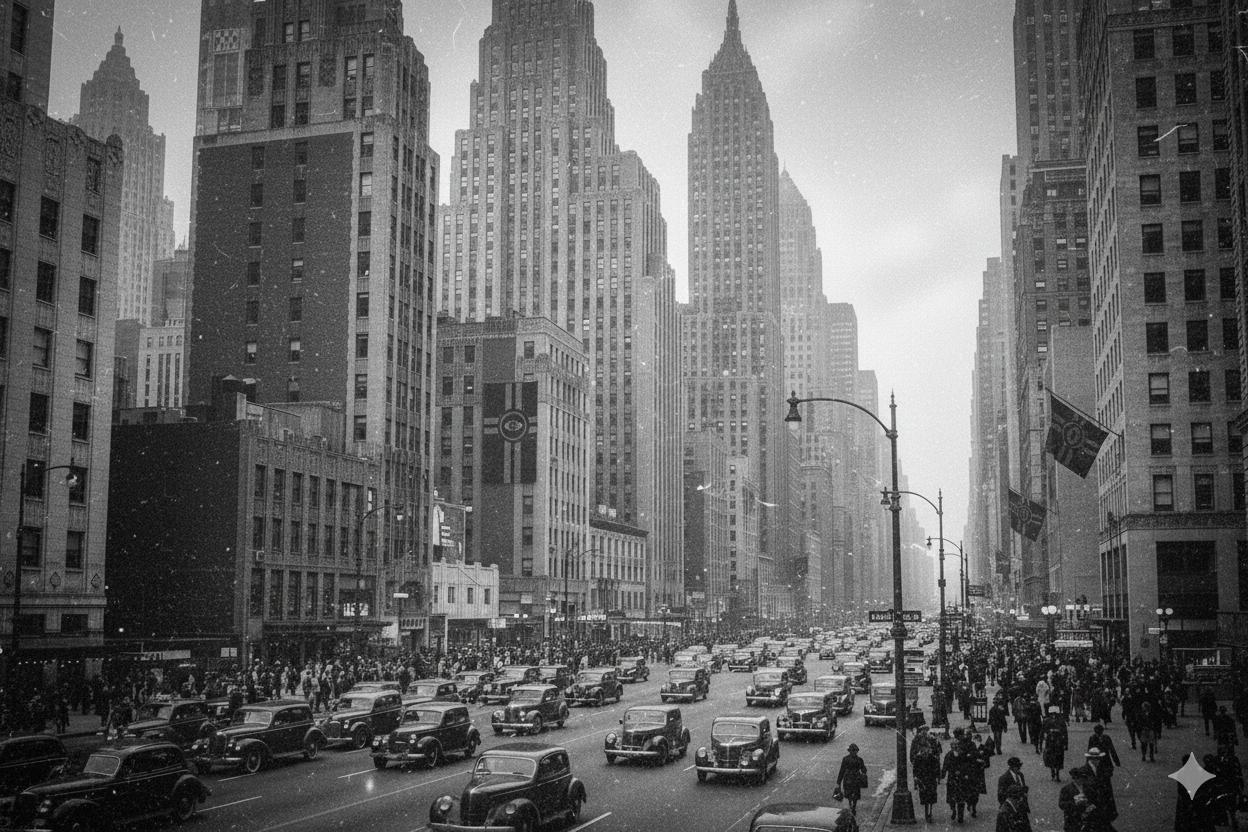
Architecturally, Axiom is dominated by the Art-Deco skyscrapers and high-risers in districts like the Upper and Lower Metropol, with the high-riser dominated skyline being a cultural icon of the city. In the outlying residential areas, brownstone roadhouses dominate the scenery, built during a period of rapid expansion starting from 1870. While large single-family homes can be found in more outlying neighborhoods, the Urbanization efforts of the Unity State have reduced their amount significantly, favoring instead more high density housing elements. Many of the roadhouse districts (such as Domis and Kingsland) are notable for the glass and copper greenhouses built atop many residential buildings to support the ever-growing population in the city.
Additionally, Axiom is home to a lively sports scene, with many Elysian sports associations maintaining their headquarters in Axiom. Most notably among all of these is football, with the city being represented in domestic and international leagues by the Regima Trekkers. Many players from the Trekkers regularly represent Elysia in the World Cup, most notably the national team’s captain Mehmet Hetemaj. The city is also home to a lively baseball scene, with the city being represented by the Regima Mets in the National Baseball League.